
AI for small business: where I'd start in 2026
Where I'd start with AI in a small business: one job your people already do by hand, run in draft mode first, and only go wider once it's been right for a while.
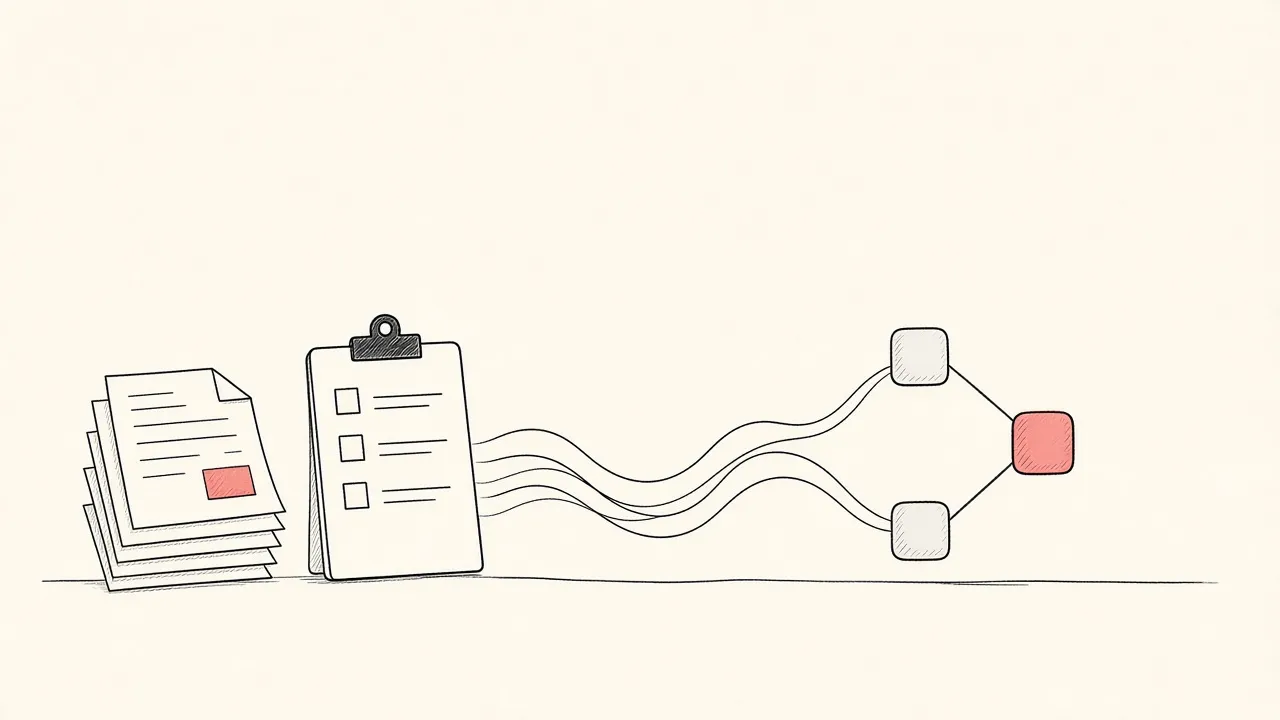
Most of the owners who ask me about AI for small business ask it the same way, half apologizing, like they're late to something. You're not. A lot of what gets shown in demos was built to impress a room, and a shop in Montreal with three people and a full calendar isn't that room, so I'd start a lot smaller than the demos do. One job your people already do by hand, over and over. A model with clear tools and clear rules for that one job and nothing else. Then you look at whether the work actually got faster or cleaner, and only then do you think about the next one.
That's most of it, really. The rest of this is me explaining why, and where I'd point you first.
(I'm Tom Cobb, by the way. I work with small teams in Quebec on agents, booking and front desk setups, and the ecommerce ops work that eats an afternoon without anybody noticing where it went.)
So what do you pick first
Something that repeats, that won't do much harm if a draft comes out wrong, and that you can put a number on. When I go through that with owners it usually ends up being support triage, or bookings and reminders, or the same order being typed into two systems, or first drafts of product copy and emails. Not always. But usually one of those.
What I wouldn't touch at the start is refunds, anything legal or medical, and anything that deletes a record or moves money without a person signing off. If you're not sure your shop is even ready for this, the AI readiness assessment gives you a rough score on the gaps before you spend anything.
And one thing I should say early because it trips people up. A chatbot that reads your FAQ back to customers and then goes quiet is not really what I mean here. It's fine, on a busy Friday it might even save you, but an agent that looks something up, updates the record, and hands the strange cases to a human is a different animal, and I wrote that difference out properly in AI agents for small business. If your job is just answering FAQ questions, the chatbot might honestly be enough. If it needs lookups and updates across systems, it won't be.
The other thing it isn't is "let's automate the whole business this quarter." When the steps never change, a fixed automation still beats a clever agent, and a boring Zapier or Make flow that just runs is a perfectly good outcome. I'd save the agents for the jobs with exceptions in them, the ones where somebody currently has to think for a second, and I'd keep a human in the loop for money, deletes, and anyone who's already angry.
Where I've seen it earn its keep
I'm not going to give you an ROI slide, because I'd have to make the numbers up. What you need is a number from before and a number from after. With that said, these are the places it tends to stick for owners who aren't trying to look futuristic.
Phones and bookings first, since that's where the leak is easiest to see. Missed calls are missed appointments, and the "we'll get back to you" form that sits for half a day isn't much better. An AI receptionist or a decent booking automation setup can take the common questions, show real open slots, send confirmations and reminders, and pass anything hard to someone on staff. Clinics and gyms are basically the same pattern on different software. I still wouldn't give it the whole front desk on day one, though. After hours, or a single appointment type, tells you plenty about whether it deserves more.
Support triage is the quiet one. The model drafts replies to the shipping and where's-my-order tickets, tags them, and leaves refunds and upset customers for a person, and for the first while it runs in draft or shadow mode so a human is still the one who presses send. Somebody on your team is probably losing an hour a day to that copy and paste loop. When it stops you notice.
Then there's the order that has to go from Shopify into the warehouse tool and into the accounting tool, which in a lot of shops means someone retyping it at four in the afternoon. If the path is identical every time, a fixed automation may be all you need and I'd tell you that. If you get partial shipments, preorders, notes that come in half French and half English, that's where an agent with tools and rules starts to make sense. Either way the dollar caps and the delete limits get hard-coded. Not "soft." Hard-coded.
First drafts of copy, too, as long as a human is the one who publishes. Product descriptions, FAQ answers, routine emails in both languages. The model writes and an editor decides, and I really wouldn't let unreviewed text go out on its own, because Quebec customers notice thin French a lot faster than most tools are willing to admit.
And the least exciting one, internal summaries. Last week's numbers, what's still open, a short what-changed-since-Monday note a manager can skim before the morning meeting. Low risk, easy to check, and it tells you something useful on the side, which is whether your data is clean enough to put in front of customers later. If the summary comes out a mess, well. Fix the data first.
Before you turn anything on
Write the job down in one sentence. Something like "draft replies to shipping tickets in English and French, and send refunds or angry customers to a person." If you can't get it into one sentence you've probably got three jobs hiding in there, and you should pick one.
Then pick a number you already track. First response time, hours spent on order entry, no-shows, tickets of one type closed, whatever you're already looking at. I push on this because without a baseline, three months later you're arguing about how it feels, and that's a bad way to decide whether to keep paying for something.
Run it in draft or shadow mode before it's live, on one channel or one ticket type, with hard stops on refunds, deletes, and personal information. OpenAI's practical guide to building AI agents puts real weight on a human stepping in when the agent hits failure thresholds or high-risk actions. It reads like it was written for bigger companies, but the advice holds just as well for a team of five.
The Quebec part
If the thing handles personal information about people in Quebec, Law 25 applies even to a small trial, so you want to know where the data lives, who can read the conversations, and what you'd do if something went wrong. The CAI has the official material. I'm not a lawyer and this is general information, not legal advice.
The other half of it is language. If customers here are going to see the agent or the chatbot, the French has to be first class, and machine translation bolted on afterward gets noticed. I go into the local side more in AI consultant Montreal.
On cost, I'm not putting Cobb & Co prices in this post. If you want market ranges, how much an AI consultant costs in Canada walks through dated third-party numbers. Starter SaaS tools and custom builds sit in completely different bands, and ask every vendor what currency they bill in before you read a number as CAD or USD.
If you want a hand
Honestly a lot of owners can get the first one going themselves. Where it's worth bringing someone in is when the job has to live inside your particular stack in a way no off-the-shelf tool covers, or Law 25 and bilingual customer work need some careful design, or a trial keeps stalling because nobody's quite sure what the scope is anymore.
If it's strategy and scoping, that's AI consulting. If you know the workflow and want it built, that's AI agents. If the first job turns out to be phones, calendars, and reminders, it's booking automation.
People sometimes ask me whether AI for small business is worth it for a really small team, and my answer is that it depends on whether it takes away a real daily loop or just adds another tool nobody measures. A three-person shop usually gets more out of one good booking or triage flow than out of a pile of copilots nobody opens.
If you already know what your first job is and you want a second pair of eyes on the metric and the guardrails, book a call. You'll come out of it with a clearer brief whether you end up working with me or with someone else.
Sources
- OpenAI, A practical guide to building AI agents
- Commission d'accès à l'information / Gouvernement du Québec, Loi 25 entry-into-force notice (22 Sept 2023) (general information, not legal advice). See also CAI.
- Cobb & Co posts linked above for readiness, agents, booking, consultant cost, and Montreal context