
AI Readiness Assessment: A Self-Score for Small Business
A 24 point self-score that shows whether your small business is ready for AI, and which gaps to fix first. Built for Montreal and Quebec, Law 25 included.
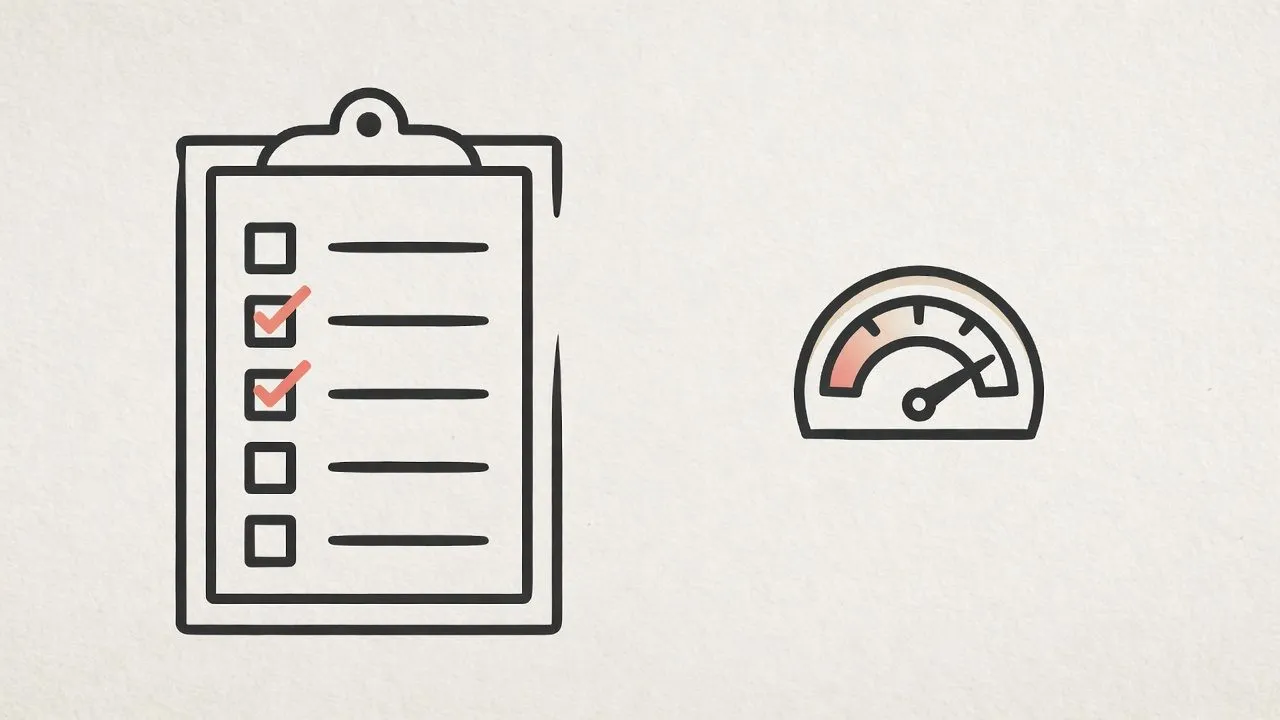
An AI readiness assessment is a quick check of whether your business has the data, processes, people and budget to get real value out of AI tools. For most small businesses in Montreal and the rest of Quebec, the honest answer is "partly." So the useful part is finding out which parts are ready and which ones will trip you up.
Below is a checklist you can score yourself on in about 15 minutes. Just a pen and some honesty.
Why do an AI readiness assessment at all
More Canadian businesses use AI than a year ago. Statistics Canada found that 19.2% of businesses used AI to produce goods or deliver services in the 12 months before the second quarter of 2026 (survey run April 1 to May 6, 2026). A year earlier that number was 12.2%. And in the third quarter of 2026, 25.2% said they plan to use AI in the next 12 months.
But the same Q2 2026 survey found 40.0% of businesses said AI isn't relevant to them.
Both groups can be right. The point of an assessment is to figure out which group you're in before you spend money.
A common way this goes wrong: a business signs up for a tool, nobody really owns it, the data it needs lives in three spreadsheets and someone's inbox, and a few months later it gets cancelled. That isn't an AI problem. It's a readiness problem.
How the self-score works
There are six areas with four statements each. Give yourself 1 point for every statement that is true today. Not "true once we get to it." Today. The max score is 24.
1. Data (0 to 4 points)
- Your customer, sales and job info lives in a few known systems, not in personal inboxes and paper files.
- You could export it to a spreadsheet in under an hour.
- Someone cleans out duplicates and old records at least now and then.
- You know which of it is personal information about clients or staff.
AI tools work from whatever you feed them. Messy data in, messy answers out.
2. Processes (0 to 4 points)
- You can name 2 or 3 tasks that eat hours every week, like quotes, booking, follow ups or answering the same emails.
- Those tasks follow roughly the same steps each time.
- The steps are written down somewhere, even as a rough list.
- You know about how long each one takes right now.
That last one matters more than people think. Without a before number, you can't tell if anything got better.
3. Tools (0 to 4 points)
- Your main software (CRM, booking, accounting, Shopify, whatever you run on) is cloud based and still supported.
- It has an API or connects to tools like Zapier or Make.
- You know who has admin access to each tool.
- You aren't paying for tools nobody uses.
4. People (0 to 4 points)
- One person will own the AI project and has real time set aside for it.
- Your team has tried tools like ChatGPT, Copilot or Gemini for work, even informally.
- You have a simple rule for what staff can and can't paste into AI tools.
- Staff were asked what slows them down, not just told what's coming.
5. Budget (0 to 4 points)
- You have a monthly amount set aside for tools and setup, even a small one.
- You've looked up the subscription prices of the tools you'd likely need.
- You're fine running a 60 to 90 day test before deciding.
- You know what a win looks like in dollars or hours.
If you want a sense of what outside help runs, I wrote up what an AI consultant costs in Canada in a separate post.
6. Risk and privacy, including Law 25 (0 to 4 points)
- You know where your tools store data, and whether any of it leaves Quebec.
- Your website names the person in charge of protecting personal information, with contact details.
- You have a privacy policy in plain language that's kept up to date.
- You'd know what to do if a tool made a decision about a client automatically.
Law 25 updated Quebec's private sector privacy law in stages, and most of the rules have applied since September 2023. The Commission d'accès à l'information has a summary of the main changes. A few of them touch AI projects directly.
- New systems. A privacy impact assessment is required for any project to acquire, develop or overhaul an information system that involves personal information. A new AI tool that handles client data can fall into that.
- Data leaving Quebec. Before personal information is communicated outside Quebec, you need a privacy impact assessment and a written agreement. Plenty of AI tools process data on servers outside the province.
- Automated decisions. If a decision about someone is based only on automated processing of their personal information, you have to tell them. They can then ask a staff member to review it (section 12.1).
- Who's responsible. The title and contact details of the person in charge of personal information have to be published on your website.
- Penalties. Administrative penalties can reach $10 million or 2% of worldwide turnover.
This isn't legal advice. If you handle sensitive data like health records, talk to a lawyer before you connect it to any AI tool.
What your score means
0 to 8: not ready yet. Hold off on buying AI tools. Clean up your data and write down your main processes first.
9 to 16: ready for a small test. Pick one repetitive task with a clear before number. Try one tool on it for 60 to 90 days and measure.
17 to 24: ready for something bigger. Connecting AI to your booking system or CRM makes sense now, or even AI agents for small business that handle a whole task end to end.
Most businesses will land somewhere in the middle. And that's fine. Your lowest area tells you where to start.
Gaps that tend to show up
No owner. The project belongs to "everyone," so it belongs to no one.
Tool first, problem second. Someone sees a demo and buys it before deciding what it should fix.
Two languages. If your clients write to you in French and English, test any AI tool in both. Output quality isn't always the same in each.
Privacy as an afterthought. In Quebec this one can get expensive. It's much easier to sort out before a tool goes live than after.
When an outside assessment helps
A self-score gives you a rough picture. But it can't map how your tools actually connect, or check what a specific AI vendor does with your data. That's where a structured AI readiness assessment with someone outside the business helps. You get a list of what to fix, what to try first and what to skip.
And if you'd rather hand off the whole project, there's more on how I work on my AI consultant Montreal page.
FAQ
How do I know if my business is ready for AI?
Check six things: your data, your processes, your tools, your people, your budget and your privacy setup. If you can name a repetitive task, you know how long it takes, and the data for it is in one place, you're probably ready to test something small.
What does an AI readiness assessment include?
Usually a review of where your data lives, which tasks are good candidates for AI, how your current tools connect, who will own the work, and what privacy rules apply. The output should be a short, ranked list of next steps, not a 60 page report.
Does Law 25 apply to the AI tools my business uses?
If the tool handles personal information about people in Quebec, Law 25 applies to how you collect, use and share that information. That can mean a privacy impact assessment, a written agreement if data leaves Quebec, and telling people when a decision about them is fully automated.
How long does an AI readiness assessment take?
The self-score above takes about 15 minutes. A deeper review with an outside consultant takes longer because it means looking at your actual systems and data, and the time depends on how many tools you run.
Do I need a big budget to start using AI?
No. A small test on one task with an off the shelf tool is a normal place to start. What you need more than budget is a clear before number, so you can tell whether it worked.
Want a second opinion on your score?
If you scored yourself and you're not sure what to do next, that's normal. You can book a call and we'll go through your answers together. Or read more about the AI audit first and decide later. No pressure either way.